
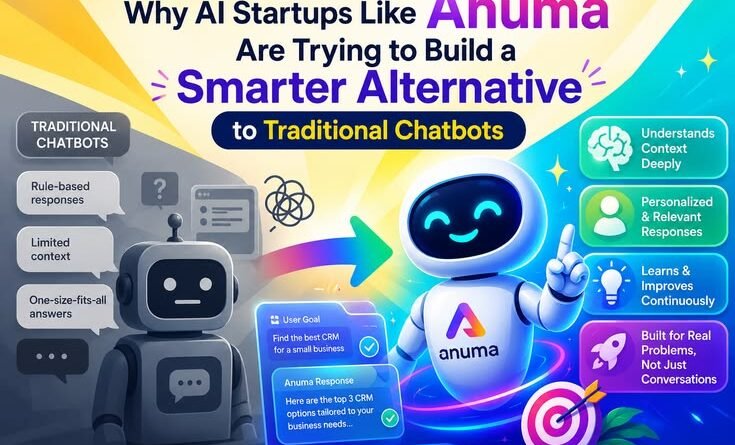
Why AI Startups Like Anuma Are Trying to Build a Smarter Alternative to Traditional Chatbots
By a tech blogger who has used way too many AI tools and still hasn’t found the perfect one — until recently.
We have got four browser tabs open right now, each logged into a different AI chatbot.
There’s ChatGPT for quick coding questions. Claude for long-form writing. Gemini when I need something connected to my Google Docs. And DeepSeek when I want to run something locally without feeding my thoughts to a US server farm.
It’s ridiculous, honestly. And the worst part? Every single one of them starts fresh every time I open a new chat. I’ve re-explained my writing style, my project context, my preferences — probably hundreds of times across hundreds of sessions. It’s like having amnesia as a service.
That frustration is exactly what a new wave of AI startups is trying to solve. Anuma is one of the most interesting ones I’ve come across lately, and understanding why they exist tells you a lot about where AI is headed — and what’s quietly broken about the chatbot landscape right now.
The Chatbot Problem Nobody Talks About Enough
Here’s the thing nobody says in those glossy AI product demos: mainstream chatbots are built to keep you inside their walled garden, not to actually serve you best.
Every time you pour context into ChatGPT — your project details, your tone preferences, your goals — that context belongs to OpenAI. It sits on their servers, governed by their terms. You’re essentially building a profile that makes their product stickier, not giving yourself a portable intelligence layer you own.
I didn’t think much about this until a lawyer friend forwarded me a Reuters article about how chatbot conversations can potentially be used against users in court. That hit different. All those times I typed honest, half-formed thoughts into a chat window — those conversations are stored somewhere I don’t control, potentially readable by humans doing “quality assurance,” sometimes used to train future model versions unless you actively hunt down an opt-out toggle buried in settings.
The Economist recently reported that both Anthropic and OpenAI are increasingly locking their best models into tighter proprietary ecosystems. The smarter the AI gets, the more locked in you become.
That’s the actual problem. Not that chatbots are dumb — they’re genuinely impressive now. The problem is the architecture. Who owns your memory? Who controls your context? And why do you have to choose between capability and privacy?
What Anuma Is Actually Doing Differently
Anuma launched publicly in late April 2026, and the pitch is straightforward enough that it made me stop scrolling when I first saw it.
One subscription. Every major AI model — ChatGPT, Claude, Gemini, Grok, DeepSeek, Kimi, Llama, Mistral, and more — accessed from a single app. With a persistent memory layer that follows you across all of them.
That sounds like a small convenience feature, but it’s actually a fundamental architectural flip.
Traditional chatbot apps store your memory on their servers and decide what to do with it. Anuma’s “Private Memory Layer” stores your memory in an encrypted vault on your device, encrypted client-side before it ever touches their servers. Even if Anuma’s servers were fully compromised, all an attacker would find is what they describe as “cryptographic noise” — your actual conversations are unreadable to anyone but you.
I spent a few days with the beta before the public launch and the thing that genuinely surprised me wasn’t the privacy angle — it was how much time I saved just not having to re-explain myself. I started a project context in one session, continued it with a different model mid-conversation, and nothing broke. No copy-pasting. No “as I mentioned earlier” prompts. It just… remembered.
The Context-Switching Tax Is Real
Let me give you a concrete example of what this costs people.
Say you’re a freelance copywriter. You work on three different brand accounts. Each has its own tone guidelines, product details, audience nuances. Every time you open a chatbot session, you’re either:
a) Re-pasting a lengthy prompt with all the context every single time
b) Maintaining separate “memory” documents you copy-paste from
c) Paying for ChatGPT’s custom instructions feature — which still only works within ChatGPT
That last option is what most power users end up doing. But then you hit a task where Claude writes better prose, or you want to compare outputs side by side, and suddenly you’re back to the copy-paste cycle.
Anuma’s “Council Mode” is a direct answer to this: it lets you query multiple models simultaneously and see their answers side by side. I threw a tricky product positioning question at it with three models running in parallel — Claude, GPT-4, and Gemini. Getting three different angles in one view, with none of them needing context re-entry, was genuinely useful in a way I hadn’t expected.
The Privacy Problem Was Worse Than I Realized
One of the things that shifted my thinking while researching Anuma was digging into their 2026 AI Chat Privacy Report. They analyzed 15 major AI chat platforms across encryption standards, data training practices, and memory architecture.
The finding that stuck with me: only 7 of those 15 major platforms offer end-to-end encryption. In a space where over a billion people use AI chat tools weekly, more than half the major platforms don’t encrypt your conversations end-to-end. They also pointed out incidents from 2025 that most people scrolled past: malicious browser extensions stealing hundreds of thousands of AI chat logs from ChatGPT and DeepSeek, an OpenAI vendor breach, and over 300,000 “private” Grok conversations ending up indexed by Google Search.
None of these are fringe scenarios. These are documented, reported events. And the response from the major platforms was… mostly policy updates. Not architecture changes.
Anuma’s approach — client-side encryption with keys that only the user holds — means those attacks would have yielded nothing useful. That’s not a marketing claim; that’s just how math works. If you encrypt before the data leaves your device, a server breach is dramatically less catastrophic.
The Brave Browser Parallel Is Worth Understanding
Ankur Nandwani, one of Anuma’s core contributors, previously co-created the Basic Attention Token — the mechanism behind Brave Browser’s privacy-first ad model. Brave now has over 112 million monthly active users. That backstory matters because it proves the same thesis Anuma is now betting on: privacy isn’t a niche preference when the product is actually good enough.
Brave didn’t win users by telling people to care more about privacy. It won by making a faster, cleaner browser that happened to also block surveillance by default. The privacy was the architecture, not a feature checkbox.
Nandwani has been pretty direct about seeing the same pattern repeat with AI: “Brave was created because the browser had become a surveillance tool and users had no real say in it. AI is heading in the same direction.”
Whether or not you’re personally worried about AI privacy, that framing is worth sitting with. The browser analogy is uncomfortably apt.
How to Actually Use Something Like Anuma Right Now
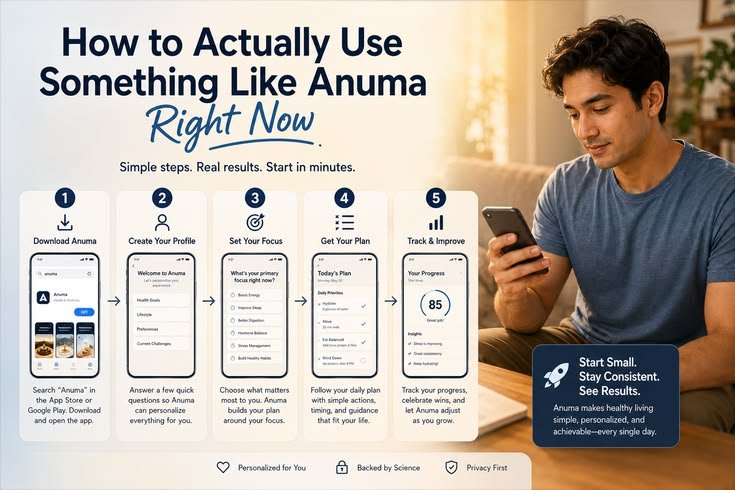
If you’ve been burned by the context-loss problem or the multi-tool juggling act, here’s how to think about getting started:
Step 1: Audit your current AI usage
Write down which tools you actually use, what you use each one for, and how often you’re re-entering context. This gives you a real baseline for whether a unified platform saves you time.
Step 2: Identify your highest-friction workflows
For most people I know, this is either client work (where context is client-specific and repetitive) or creative projects (where tone and style need to stay consistent across sessions). These are the workflows that benefit most from persistent memory.
Step 3: Test Council Mode on a real decision
Don’t use multi-model comparison on a trivial task. Use it on something where you genuinely aren’t sure which approach is right — a headline, a product positioning statement, a technical architecture question. The value shows up fastest when the answer isn’t obvious.
Step 4: Check what you’re actually consenting to
This sounds tedious but takes about 10 minutes. Open the settings in whatever AI tools you currently use and check the data training and privacy settings. Most people discover they’ve been opted into things they didn’t know about. Whether you switch platforms or not, knowing what you’ve agreed to is just good practice.
Step 5: Don’t over-migrate
This is where I’ve seen people go wrong. You don’t need to abandon every tool you currently use. A multi-model platform works alongside specialized tools. If you use GitHub Copilot for coding or Perplexity for research, those have specific integrations that general platforms don’t replicate.
What Anuma Gets Right — And Where It’s Still Early
I want to be honest here because there’s real hype around anything privacy-focused right now, and hype deserves skepticism.
What genuinely works: the unified access is legitimately convenient. The memory persistence is real and saves time. The Council Mode comparison feature surfaces things you’d otherwise miss. The SMS and iMessage access — being able to ping AI models from your regular messaging apps — is surprisingly handy when you’re on your phone and don’t want to open another app.
What’s still early: the agent features for real-world tasks like billing and paperwork are listed as “coming soon.” The iOS and Android apps weren’t live at public launch — web-first, with mobile to follow. At $5.99/month at the base tier, pricing is reasonable, but it adds up if you’re already paying for individual subscriptions elsewhere (though the value proposition flips if you’re currently paying for ChatGPT Plus, Claude Pro, and Gemini Advanced separately).
The company is also very new. Founded in 2026, small team, early revenue. That’s not a red flag — every good tool starts somewhere — but it’s a factor for anyone considering this for business-critical workflows. Redundancy planning matters.
The Bigger Picture: Why This Category Matters
The fact that Anuma exists — and that it got 10,000 users through beta before public launch — tells you something about a real market gap.
People don’t just want smarter AI. They want AI that’s on their side. That remembers them without surveilling them. That doesn’t hold their context hostage to a single provider’s subscription. That works across models because different models genuinely are better at different things.
This isn’t about being anti-OpenAI or anti-Anthropic. Those models are genuinely impressive. The issue is the relationship between users and those platforms — who owns what, who has leverage over whom, what happens when the terms change.
The parallel to email is interesting here. Email clients compete. Gmail, Outlook, Apple Mail, Fastmail — they all read the same protocol. Nobody would accept a world where switching email providers meant losing all your old emails. But that’s basically where AI memory is right now. Every platform reset, every lost context, is a small tax on users and a small moat for providers.
Startups like Anuma are essentially arguing that this shouldn’t be a permanent feature of the landscape. That there’s a version of AI assistance where the memory layer is portable and user-owned, the model choice is open, and the context you build over months of interactions actually belongs to you.
Whether Anuma specifically becomes the platform that wins this argument is hard to say. The space is early and competitive. But the argument itself seems increasingly hard to ignore.
Common Mistakes to Avoid
Assuming “private” means the AI is weaker. Using Claude or GPT-4 through Anuma gives you the same underlying model capability. Privacy is about where your data lives, not how smart the model is.
Over-relying on memory as a substitute for good prompting. Persistent memory helps with context, but you still need to be clear and specific in your prompts. Memory tells the AI who you are; you still need to tell it what you want clearly each time.
Ignoring the encryption tradeoff. Client-side encryption means if you lose access to your device or your keys, recovery options are limited by design. Understand that before you commit sensitive work to any encrypted memory system.
Using comparison mode for everything. Council Mode is powerful but slower. Save it for decisions where you actually need multiple perspectives — not routine tasks where one good answer is fine.
Where This Is All Going
The chatbot landscape in 2026 is genuinely more interesting than it was two years ago — not because the models themselves are dramatically smarter week-to-week, but because the infrastructure around them is starting to get questioned.
Who owns AI memory? Can you take your context with you? Should AI data be used to train models without explicit consent? These aren’t just product design questions. They’re the kinds of questions that determine whether AI becomes a tool that serves people or a system that serves the companies building it.
Anuma’s bet is that enough users care about the difference to build a real product around it. The 10,000 beta users, and everything happening in the broader privacy-aware tech community, suggest that bet isn’t obviously wrong.
I still have multiple AI tabs open. But for the first time in a while, I’m genuinely curious whether I won’t, six months from now.
Tried Anuma or a similar multi-model platform? I’d genuinely like to hear what workflows clicked and what didn’t — especially from people using it for client work or creative projects where context consistency matters most.



Pingback: How Anthropic Is Expanding Claude AI for Lawyers and Legal Work
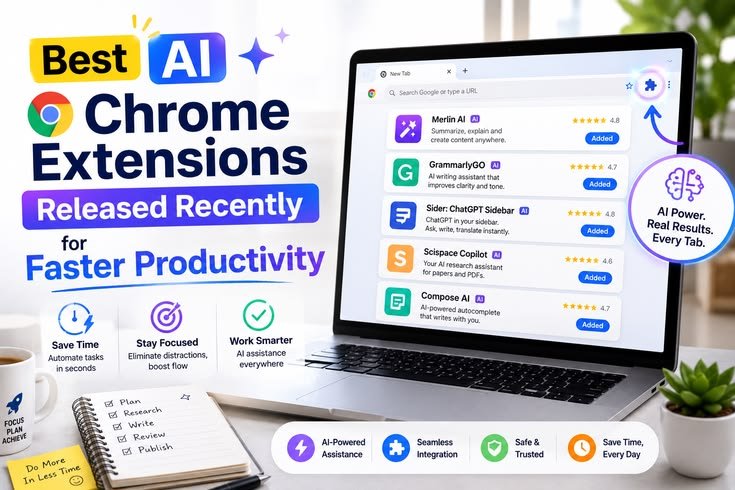
Pingback: Best AI Chrome Extensions Released Recently for Faster Productivity
Pingback: Why Tech Companies Are Racing to Build Smarter AI Devices – MSR Technical