
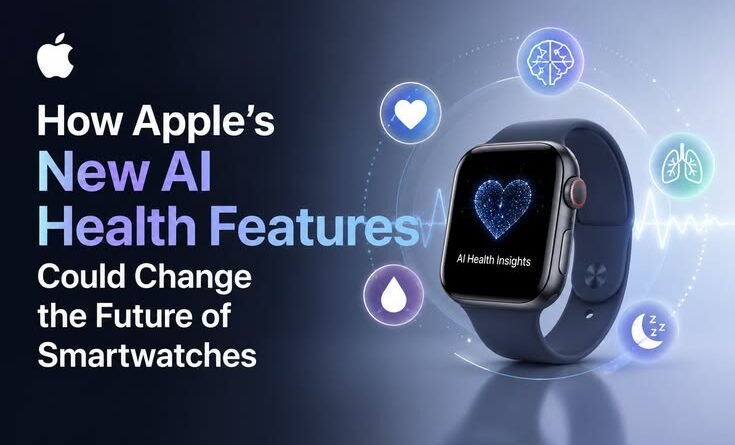
How Apple’s New AI Health Features Could Change the Future of Smartwatches
“My Apple Watch caught something my doctor almost missed — and that’s when I started taking these AI health features seriously.”
Last October, I was prepping for a short trek in the Aravalli hills near Jodhpur. I’d just strapped on my Apple Watch Ultra 2, more out of habit than necessity. About an hour into the hike, the watch buzzed with an alert I’d never seen before — an irregular heart rhythm notification, and right alongside it, a short AI-generated summary explaining what it likely meant, what I should do next, and when I should worry.
I wasn’t panicking. But I also wasn’t dismissing it. That little moment — standing on a dusty trail, reading a health insight on a screen strapped to my wrist — felt genuinely different. Not gimmicky. Not overwhelming. Just… useful.
That’s the thing about Apple’s newer AI health features. They don’t feel like a tech demo anymore. They’re starting to feel like an actual second opinion.
What’s actually new here (and what isn’t)
Before we get into the exciting stuff, let’s be real for a second. Smartwatches have been promising to “revolutionize health” since at least 2015. Step counters, sleep tracking, heart rate monitors — we’ve heard the pitch. Most of us wore our fancy watches for three weeks and then went back to ignoring the notifications.
But Apple’s approach with watchOS and its Health app has quietly been getting sharper over the past couple of years, specifically around how AI interprets and contextualizes the data the watch already collects. That shift is what makes this generation feel meaningfully different.
Here’s a quick breakdown of what’s genuinely changed:
- Health Intelligence — AI that spots patterns in your data over time, not just today’s numbers.
- Vitals App — Tracks heart rate, respiratory rate, wrist temp, and sleep together as a daily baseline.
- Mental Health Tracking — State of Mind logging with AI-assisted reflection and pattern recognition.
- FDA-Cleared Monitoring — ECG, AFib history, and sleep apnea detection now with real clinical backing.
The shift from data collection to data understanding
Here’s the part that most articles skip over: collecting health data was never really the problem. My old Fitbit could track my steps and sleep. What it couldn’t do was tell me what any of it meant in context.
Apple’s Health Intelligence layer changes that equation. Instead of showing you a graph and leaving you to google what a “low HRV” actually means, the system now synthesizes data across multiple sensors over weeks and months to build something more like a personal health baseline. When something deviates from your normal — not some generic population average, but your normal — it flags it.
That’s a subtle but huge difference. It’s the difference between a smoke alarm that goes off every time you cook, and one that actually knows the difference between your morning toast and a real fire.
Real scenario: A friend of mine who teaches at a local college noticed her resting heart rate gradually creeping up over three weeks. The watch flagged it before she had any symptoms. Turned out she was borderline anemic. She would have written off the fatigue as “stress from semester end.” The watch didn’t diagnose her — but it pushed her to go get a blood test she wouldn’t have otherwise booked.
Sleep apnea detection: the one that surprised me most
I’ll admit I was skeptical about the sleep apnea feature when it launched. How is a watch on my wrist going to detect something that clinics use bulky overnight monitoring equipment for?
The short answer: it’s not doing the same thing, but it’s doing something useful. The Apple Watch Series 9 and Ultra 2 use the accelerometer to detect subtle disruptions in breathing patterns — specifically something called “signals of moderate to severe sleep apnea.” It’s not diagnosing you. It’s flagging a pattern worth investigating.
I tried it for two weeks. I sleep reasonably well, so I wasn’t expecting much. But I did learn that my sleep quality tanks on nights when I eat late — something I’d vaguely suspected but never had data to confirm. That alone changed one small habit. Not life-altering, but genuinely useful.
For people who actually do have undiagnosed sleep apnea — and there are millions who do — this kind of nudge toward a real diagnosis could be genuinely important.
How to actually use these features (not just have them)
This is where most people fall short. They buy an Apple Watch, let it track stuff in the background, and never actually engage with the data. Here’s how to get real value from the health features:
- Set up your Health Profile properly — Open the Health app on iPhone, go to your profile, and fill in everything: age, weight, height, medical conditions, and medications. The AI uses this context to personalize its assessments.
- Wear the watch to sleep for at least 2 weeks — The Vitals and sleep apnea features need a baseline. One night of data means nothing. Give it time to learn your patterns before judging whether it’s useful.
- Check the Vitals app every morning — It’s on the watch face and takes 10 seconds. A green checkmark means everything looks normal. An amber flag means something deviated from your baseline — tap it to read the explanation.
- Use State of Mind logging consistently — It feels silly at first. You’re rating how you feel with an emoji wheel. But after 3–4 weeks, the AI can correlate your mood patterns with sleep, exercise, and other factors. The insights tab gets genuinely interesting.
- Share your health data with your doctor — Go to Health app → Summary → Share with your Doctor. Apple now makes it easier to export meaningful summaries. Your cardiologist or GP can see trends they’d otherwise miss during a 15-minute checkup.
What the AI still can’t do (and mistakes people make)
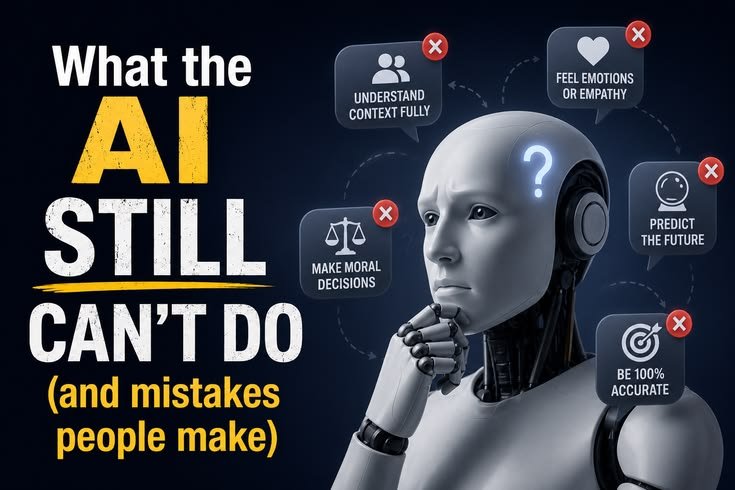
I’d be doing you a disservice if I only told you the good stuff. There are real limitations here, and some frustrating traps people fall into.
Treating alerts as diagnoses. An irregular rhythm notification is not a heart attack warning. A high respiratory rate during sleep doesn’t mean you have apnea. These are signals to investigate, not conclusions. People who catastrophize every notification burn out fast — and start ignoring the watch entirely.
Ignoring the data entirely. The other extreme: dismissing everything as noise. The watch really did catch real problems for real people. Erring too far toward skepticism means you might miss something worth checking.
Not wearing it consistently. Gaps in data hurt the AI’s ability to establish baselines. If you wear the watch three days a week, the pattern recognition suffers. For health tracking specifically, consistency matters more than perfection.
Assuming it replaces regular checkups. It doesn’t. It’s a bridge between checkups, not a substitute for them. Use it to generate better conversations with your doctor, not fewer visits.
What this means for the future of smartwatches
Here’s where I’ll put on my slightly-more-speculative hat. The trajectory Apple has set with these features points toward something much bigger than a fitness tracker with a nice interface.
We’re moving toward what some researchers call “continuous passive health monitoring” — the idea that your wearable is always in the background, quietly building a picture of your health that’s more detailed and longitudinal than any annual checkup could be. The Apple Watch already has ECG, blood oxygen, wrist temperature, crash detection, and fall detection. Rumoured additions include continuous blood glucose monitoring and blood pressure — both of which would be genuinely transformative if they arrive.
But the more important development isn’t the sensors. It’s the AI that makes sense of them together. A blood pressure reading in isolation is just a number. Blood pressure correlated with your sleep quality, stress patterns, medication timing, and physical activity over six months — that’s insight.
Apple seems to understand this, and it’s where their approach is genuinely ahead of most competitors. Samsung’s Galaxy Watch has strong sensors, and Fitbit (now Google) has solid sleep data — but neither has the same depth of AI-driven interpretation tied to a medical-grade Health Records ecosystem.
Worth noting: Apple has been careful to get FDA clearance for specific claims — sleep apnea detection, ECG, and AFib history are all cleared. This matters because it means clinicians can actually act on the data, not just shrug at it. That clinical legitimacy is what separates a health feature from a health gadget.
The privacy question (because someone has to ask it)
I’d be glossing over something important if I didn’t mention this. Your health data is some of the most sensitive information about you that exists. Apple has generally been strong on privacy — Health data is encrypted end-to-end and not used for advertising. But that doesn’t mean everyone should be comfortable with a corporation building a detailed biometric profile of them over years.
It’s a personal call. For me, the tradeoff feels worth it. But it’s worth reading through what you’re agreeing to before you share everything with iCloud Health Records.
My honest take after using this daily
I’ve been wearing an Apple Watch consistently for about two years now — not because I’m a fitness obsessive, but because the health features have genuinely added value to my life in ways I didn’t expect.
I sleep better because I have data showing me what actually affects my sleep quality. I’ve had two conversations with my doctor prompted by watch alerts that led to useful follow-ups. And I’ve learned things about my body — my HRV, my respiratory patterns, how my heart rate responds to stress — that I simply wouldn’t have known otherwise.
None of that makes me dependent on the watch. But it does make me a more informed participant in my own health. And that feels like the right direction for this technology to be heading.
The future of smartwatches isn’t about thinner bezels or brighter displays. It’s about building a device that genuinely helps you understand your body — not overwhelms you with data, but makes sense of it in ways that are actionable, accurate, and honest about their limitations.
Apple isn’t there yet. But they’re closer than anyone else right now. And that hike in October reminded me why that matters.
Tags: Apple Watch · Health AI · Wearables · watchOS · Digital Health · Sleep Tracking · ECG · Heart Health



Pingback: Why Tech Companies Are Building AI Devices That Can Understand Human Conversations Better
Pingback: Why Apple Intelligence Is Becoming One of Apple’s Biggest Software Upgrades Ever – MSR Technical
Pingback: Top Upcoming Gadgets From Apple, Samsung, and Xiaomi Worth Waiting For This Year – MSR Technical