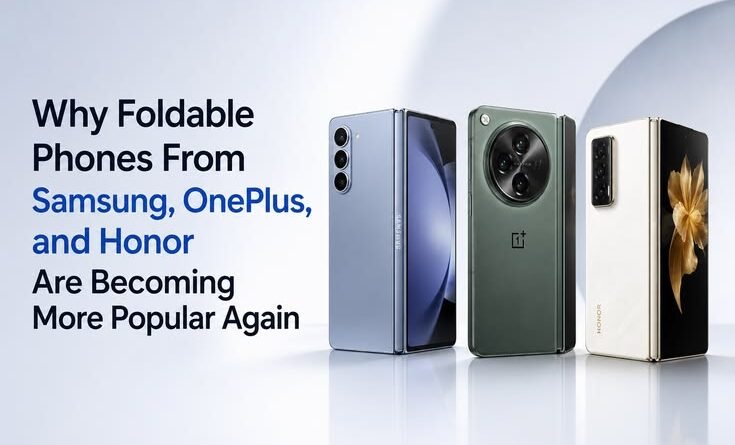
Why Foldable Phones From Samsung, OnePlus, and Honor Are Becoming More Popular Again
when I first held a foldable phone back in 2019, I thought it was a gimmick. A very expensive, very fragile gimmick. The crease on the display annoyed me. The hinge felt like it would snap in three months. And the price? Absolutely unhinged (pun intended). I put it back on the store shelf and walked away convinced that foldables were just a rich person’s toy with no real future.
Fast forward to 2025, and I’ve been daily-driving a Samsung Galaxy Z Fold 6 for the past eight months. A friend of mine switched to the OnePlus Open last year and hasn’t gone back. Another friend just picked up the Honor Magic V3 and won’t stop talking about how slim it is.
Something clearly changed. And it wasn’t just one thing.
The Hinge Problem Is (Mostly) Solved
The biggest reason people avoided foldables for so long was durability. The early Galaxy Z Fold and Flip models had hinges that collected dust and screens that developed creases so prominent you could feel them under your fingertip. I had a colleague whose foldable screen started peeling at the fold after five months. That kind of story spreads fast.
But manufacturers spent years quietly fixing this. Samsung’s latest hinge mechanism on the Fold 6 uses a reinforced armored aluminum design that feels genuinely solid. OnePlus went with a dual-rail hinge on the Open that distributes pressure more evenly across the fold. Honor’s approach on the Magic V3 is arguably the most impressive — they managed to produce one of the thinnest foldables on the planet while keeping the hinge tight and creak-free.
When I drop my Z Fold 6 on a table now (and I have, multiple times), I don’t hold my breath anymore. That’s not something I could say two years ago.
The Weight Finally Makes Sense
Early foldables were tanks. The original Galaxy Z Fold weighed around 276 grams. For context, that’s heavier than most protein bars. Carrying one in a shirt pocket felt like carrying a small book.
The Honor Magic V3 changed the conversation dramatically by coming in at around 226 grams — which is genuinely light for a book-style foldable. Samsung and OnePlus followed similar paths, shaving grams through thinner batteries, carbon fiber components, and better internal layout decisions.
I barely notice my Fold 6 in my jacket pocket now. My partner borrowed it for a day and said she’d genuinely consider switching. That reaction — from someone who had previously called foldables “too clunky to care about” — told me more than any spec sheet could.
Software Finally Caught Up
This is the part nobody talks about enough. Hardware improvements matter, but the software experience is what makes a foldable worth using every day.
When I first got the Z Fold 6, I was surprised by how much better Samsung’s One UI has gotten at actually using the large inner screen. Taskbar, multi-window, drag-and-drop between apps — it all works the way you’d hope it would. I regularly have YouTube playing on one third of the screen while taking notes in Samsung Notes and checking a recipe in Chrome. On a regular phone, that workflow is awkward. On a foldable, it’s genuinely practical.
OnePlus’s Open Canvas feature is particularly clever. It lets you chain apps together so they share space intelligently rather than just slapping two windows side by side. I borrowed my friend’s Open for a weekend trip and used it to have Google Maps open alongside WhatsApp and a translation app simultaneously. No juggling, no switching. Just everything visible at once.
Honor’s Magic OS has made similar strides. The multitasking gestures feel native now rather than bolted on.
The app ecosystem has also improved. TikTok, Netflix, Microsoft Word, and most productivity apps now have tablet-optimized layouts that actually work properly on the inner screen of a foldable. A year ago, stretching Instagram onto the inner screen looked comically stretched. Now it fills the space naturally.
The Price Drop Is Real — And Significant
Here’s the thing that probably matters most for mainstream adoption: foldables are no longer exclusively priced for tech executives.
The original Galaxy Z Fold launched at around $1,980. The Honor Magic V3 launched in many markets at significantly lower price points, and competition from OnePlus has pushed Samsung to offer better deals and trade-in offers than ever before. You can now find Z Fold 5 units — barely a year old — at prices that would have been unthinkable two years ago.
I got my Z Fold 6 with a trade-in deal and carrier offer that brought the effective price down considerably. It still wasn’t cheap, but it was no longer absurd.
OnePlus specifically positioned the Open as a value-focused foldable without sacrificing core specs, and that move shook the market in a meaningful way. Competition is doing what it always does — making better products more accessible.
Who Is Actually Buying These, and Why
From what I’ve seen and from talking to people in tech communities, a few specific groups are driving the foldable resurgence.
Remote workers and frequent travelers are a big one. If you’re on video calls, reviewing documents, and switching between apps all day, the inner screen of a book-style foldable is a genuine upgrade to your workflow. I use mine on flights to watch content on the large screen without needing a separate tablet.
Content creators — particularly short-form video creators — love the flip-style foldables like the Galaxy Z Flip 6. The ability to prop the phone at a custom angle for hands-free selfie recording without a tripod is actually useful, not just a marketing point.
Then there’s the “I’m tired of carrying a phone and a tablet” crowd. Foldables haven’t fully replaced tablets yet, but for moderate use they come close. My Z Fold 6 handles things I used to pull out my iPad for: reading long articles, editing documents, reviewing photos. Not for everything, but for enough that my iPad stays home more often.
Common Mistakes People Make When Buying a Foldable
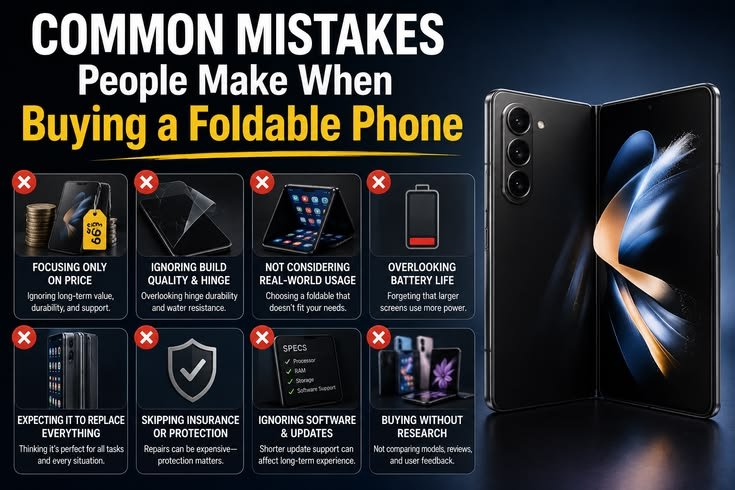
If you’re thinking about making the jump, learn from the missteps I’ve seen (and made myself).
Don’t ignore the cover screen experience. Some foldables have narrow, awkward cover screens that are frustrating to use one-handed. Before buying, actually use the cover screen for ten minutes and see if it feels natural. The Z Fold 6’s cover screen improved significantly over older Folds, but it’s still narrower than a regular phone.
Don’t skip the case. The inner screen, despite being much better than early foldables, is still a plastic display. It scratches more easily than glass. A good case protects the hinge and the corners — the most vulnerable spots in a drop.
Don’t assume all your apps are optimized. Before switching, open your five most-used apps on a display model in the store and see how they handle the large format. Most major apps are fine now, but a few still look stretched or letterboxed.
Don’t buy on spec sheets alone. The feel of the hinge, the weight distribution, the cover screen usability — none of that shows up in a comparison table. Handle the phone in person before committing.
The Flip Category Is Having Its Own Moment
While book-style foldables get more attention for productivity, flip-style foldables are quietly winning over a completely different audience.
The Galaxy Z Flip 6 and its competitors appeal to people who want a distinctive, compact phone that fits in small pockets and stands out visually. The flip form factor makes a regular-sized phone pocket-sized when closed. For someone who finds modern phones too large, that’s not a small thing.
And the Always-On cover screen improvements mean you can check notifications, control Spotify, set timers, and even run some apps without opening the phone at all. It’s a genuinely different relationship with your device.
Where This Is All Headed
I don’t think foldables are going to replace rectangular phones for the average person anytime soon. But I do think the window of “early adopter weirdness” is closing. These are real phones now, with real durability, real software support, and real-world use cases that justify the premium — at least for the right person.
Samsung has the brand recognition and ecosystem. OnePlus has the value positioning and enthusiast community. Honor is pushing the design and thinness envelope in ways that are forcing everyone else to respond.
The version of me from 2019 who put that foldable back on the shelf wouldn’t believe I’m writing this. But after eight months of daily use, I can’t really imagine going back to a flat phone for my primary device.
If you’re curious about foldables and have been waiting for them to “get good” — they’re there. Not perfect, not for everyone, but genuinely good.
Have you tried a foldable recently? Drop your experience in the comments — I’m always curious whether other people’s day-to-day matches mine or throws up surprises I haven’t run into yet.