
Why Companies Like OpenAI, Anthropic, and Meta Are Investing in AI
When I sitting in a coffee shop and remember sometime in late 2022, watching a coworker demo ChatGPT for the first time. He typed in a question about writing a Python script, and in about four seconds, he got a working answer. We both just sat there for a moment. Not because it was magic — but because we both knew, without saying it out loud, that something had shifted.
That feeling never really went away. And the more I dug into what was actually happening behind the scenes — the billions being poured in, the talent wars, the compute arms race — the clearer it became that this isn’t just companies chasing a trend. This is a full-scale strategic repositioning of the global tech economy.
So let me break down why OpenAI, Anthropic, Meta, Google, and their peers are going absolutely all-in on AI — and why, honestly, it makes total sense when you look at the numbers and the incentives.
The Market Is Simply Too Big to Ignore
Let’s start with the obvious thing nobody wants to say plainly: there is an absurd amount of money on the table.
McKinsey estimated that generative AI alone could add somewhere between $2.6 trillion and $4.4 trillion annually to the global economy. That’s not a projection about some distant sci-fi future — that’s the window these companies believe is opening right now.
When you’re a company like Meta, which already has billions of users across WhatsApp, Instagram, and Facebook, the ability to layer intelligent, personalized AI experiences on top of that infrastructure is potentially worth more than any single product you’ve ever built. Meta’s ad business — already one of the most profitable in history — becomes dramatically more valuable if AI can help it target, generate, and optimize content at a level humans simply can’t match at scale.
For OpenAI and Anthropic, the calculus is slightly different. They’re not sitting on existing user bases of that size. They’re trying to build the foundational models — the engines — that every other company will eventually license or build on top of. Think of it like being the company that sells picks and shovels during a gold rush. Except in this case, you also get to mine gold yourself.
The “First Mover” Pressure Is Real — and Brutal
Here’s something I don’t think gets talked about enough: the competitive dynamics in AI are ruthless in a way that most industries aren’t.
In most software businesses, being six months late to a market isn’t necessarily fatal. You can catch up, differentiate on features, win on pricing. AI doesn’t work that way — at least not at the foundation model level. The companies that accumulate the most training data, the most compute, and the most engineering talent right now are building advantages that compound over time. A model trained on more data, with better architecture, tends to stay ahead. It’s not like releasing a slightly better smartphone app.
This is why you see OpenAI burning through capital at rates that would be alarming in any other context. It’s not recklessness — it’s a calculated bet that the cost of not being at the frontier is higher than the cost of the investment itself.
Anthropic, which was founded largely by former OpenAI researchers, operates from the same basic logic — but with a genuine emphasis on safety as a differentiator. That’s not just marketing. Their Constitutional AI approach and focus on alignment research is both a real philosophical commitment and, frankly, a smart positioning move in a world where governments are increasingly watching AI companies very carefully.
The Infrastructure Play Nobody Talks About Enough
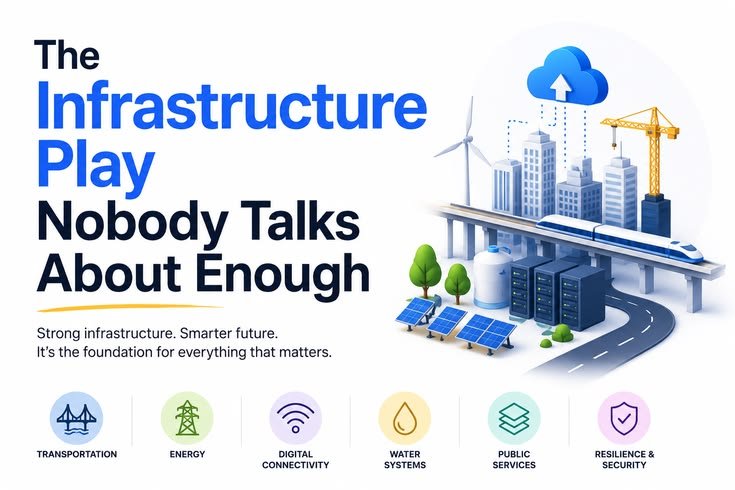
One thing that surprised me when I started paying closer attention to this space: the AI investment story isn’t just about the models. It’s about who controls the pipes.
Training large language models requires enormous amounts of compute — specialized chips (mostly NVIDIA GPUs, though companies are now racing to build their own), massive data centers, and energy at a scale that makes your head spin. OpenAI’s partnership with Microsoft, for example, isn’t just a funding deal. It’s access to Azure’s global cloud infrastructure. Meta has been building its own GPU clusters aggressively. Google has TPUs.
What this means is that the companies investing in AI right now aren’t just buying a product capability — they’re building physical infrastructure moats. Once you’ve spent $10 billion building out data centers optimized for AI workloads, that’s not something a competitor can replicate overnight. The investment is creating real, durable barriers to entry.
I got a small taste of this thinking when I was testing different APIs for a side project last year. The performance gap between well-resourced frontier models and smaller, cheaper alternatives was significant — not just in quality, but in latency, reliability, and the ability to handle edge cases. The infrastructure behind the model matters enormously. And building that infrastructure costs money that only a handful of companies in the world can actually spend.
Talent Is the Actual Scarce Resource
I’ve spoken to a few people who’ve gone through the hiring process at AI labs, and one thing that comes up consistently: the talent competition is unlike anything they’ve seen in tech before.
A genuinely world-class AI researcher — someone who can push the frontier on model architecture or alignment — is, at this point in history, one of the rarest professional profiles on earth. There are maybe a few thousand people globally who sit at that level. And every major lab, plus Google DeepMind, plus well-funded startups, plus now big enterprises building internal AI teams, are all chasing the same people.
The salaries being offered are staggering. But more than that, the interesting part is how much the mission matters to the people doing the work. A lot of the top researchers genuinely believe they’re working on the most consequential technology in human history. That belief is both a recruiting tool and, in some cases, a genuine source of internal tension — particularly around safety, deployment decisions, and the pace of development.
This talent concentration is another reason the investment levels make sense. You’re not just buying compute — you’re buying the ability to attract and retain the people who can actually make the compute useful.
The Enterprise Revenue Opportunity Is Already Here
Something shifted around 2024 that I think changed the investment calculus significantly: enterprise customers stopped being skeptical and started writing checks.
When I talked to a few people working in enterprise software sales, the consistent feedback was that AI-related conversations had moved from “interesting demo, let’s revisit next year” to “how fast can we get this deployed.” Companies in legal, finance, healthcare, and customer support are finding real, measurable ROI from AI tools — not hypothetical future ROI, but actual reductions in hours spent on document review, customer service costs, and code review cycles.
This matters for the investment thesis because it means the revenue isn’t just theoretical. Anthropic’s Claude is being used by companies like Salesforce and Slack. OpenAI has enterprise contracts with significant annual contract values. Meta’s AI tools are embedded in products used by hundreds of millions of people daily, driving engagement metrics that translate directly to ad revenue.
The feedback loop is also important: more enterprise customers means more real-world data and use cases, which feeds back into model improvement, which attracts more enterprise customers. Once that cycle is running, it’s very hard to interrupt.
What Often Gets Missed: The Defensive Investment
Here’s an angle that doesn’t come up in most coverage — some of this investment is defensive.
If you’re Google, and you’ve built one of the most profitable businesses in history on search, the emergence of AI-powered answer engines is an existential threat to your core revenue model. Every query that gets answered directly by a language model is a query that doesn’t generate a search result page with ads.
Google’s investment in AI isn’t purely about going on offense — it’s also about making sure they’re not disrupted out of their dominant position. The same logic applies to Microsoft’s investment in OpenAI. Word, Excel, Outlook — these are mature products. Layering Copilot on top of them isn’t just about adding features; it’s about making the Microsoft 365 suite feel indispensable again to enterprise customers who might otherwise be looking for alternatives.
Defensive investments at this scale are sometimes the most rational investments of all. The cost of not investing, if AI does reshape these markets the way many expect, is potentially catastrophic for incumbents.
A Mistake I’ve Seen Smart People Make
One thing I want to flag, because I’ve seen it trip up people who are otherwise thoughtful about this: confusing “AI investment” with “AI hype” as if they’re the same thing.
Yes, there’s hype. Yes, some valuations are probably stretched. Yes, not every AI startup that raised $50 million in 2023 is going to survive. That’s all true.
But the underlying reason the major players are investing at this scale isn’t hype-driven — it’s structurally motivated by genuine market opportunity, genuine competitive pressure, genuine infrastructure advantages, and genuine early enterprise revenue. Dismissing all of it as a bubble because some of the valuations look frothy is a mistake. The smart read is to distinguish between the specific companies and bets that are probably overvalued and the broader technological shift, which is very real.
Where Does This Leave the Rest of Us?
Honestly? In a better position than most people realize.
The competition between these companies is producing better, cheaper, more accessible AI tools faster than any single monopolist would. A year ago, running a capable language model required expensive API access. Now there are open-source models you can run locally. The tools available to developers, writers, analysts, and small business owners have improved dramatically — and the pace isn’t slowing.
The companies investing billions are, in a strange way, subsidizing your access to technology that would have cost millions to build just a few years ago.
The race isn’t over. It’s barely started. And watching it unfold — with a decent understanding of why these companies are running as fast as they are — makes it a lot easier to figure out where the real opportunities are, and where the noise is.
If you’ve been following this space and want to dig deeper, start by actually using the tools — Claude, ChatGPT, Gemini, Llama. The gap between reading about AI and using it daily is where the real understanding lives.





Pingback: Why Foldable Phones Are Finally Becoming More Practical
Pingback: Best Free Productivity Apps Released This Year for Students & Professionals
Pingback: Why AI Search Engines Like Perplexity and Gemini Are Challenging Traditional Google Search – MSR Technical